Category: Temporal Rights
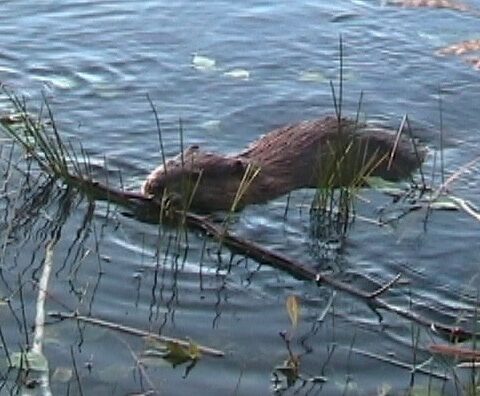
Temporal Rights is the name of an unprecedented view of universal natural rights. It is based on the existential fact that is easily comprehended by visualizing a beaver cutting down a tree and asking, “Does a beaver have the right to cut down trees?”
Watching the beaver exerting its power over the tree is watching a beaver exercise its authority over the tree. This authority is coincident with its right to cut down the tree.
Thomas Hobbes in Leviathan, Chapter XIV (Of the First and Second Natural Laws, and of Contracts) writes:
“The RIGHT OF NATURE, which Writers commonly call Jus Naturale, is the Liberty each man hath, to use his own power, as he will himself, for the preservation of his own Nature; that is to say, of his own Life; and consequently, of doing any thing, which in his own Judgment, and Reason, he shall conceive to be the aptest means thereunto.” [Emphasis mine]
This attachment of rights and power shows that Hobbes was very close to the Temporal Rights paradigm. It seems clear that if had not restricted his thinking by looking only for human rights, he would have found Temporal Rights.
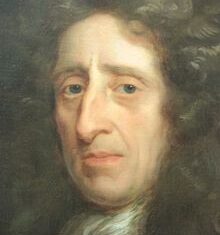
John Locke had similar thoughts and was also walking along the shore of universal Temporal Rights. He said this in his Second Treatise, §4:
“A state also of equality, wherein all the power and jurisdiction is reciprocal, no one having more than another; there being nothing more evident, than that creatures of the same species and rank, promiscuously born to all the same advantages of nature, and the use of the same faculties, should also be equal one amongst another without subordination or subjection…” [Emphasis mine]
He is talking about capabilities (power) as a basis for natural rights and domains (jurisdiction) of “operations”. These are exact parallels to the Temporal Rights paradigm. Here too, I think if he had been looking for rights for a beaver, for example, he would have discovered the Temporal Rights view of universal natural rights.